





When to Settle vs. Litigate a Wrongful Discharge Claim?


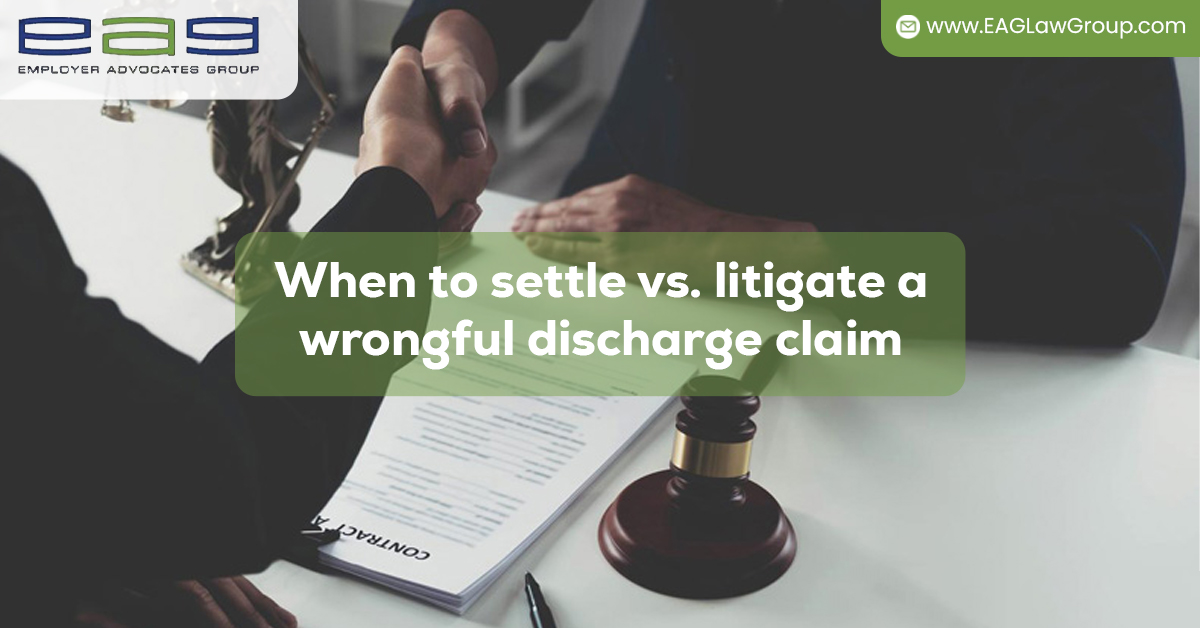
Wrongful discharge claims can shake any business. Even strong companies can feel stuck when a former employee files a complaint against them. The risk feels real. The cost feels heavy. A wrongful termination claim is not only about legal rules. It is about time, money, and peace of mind. Employers need to know when to push forward and when to pull back. That choice can shape the future of the business.
At Employer Advocates Group, we help employers make informed decisions that protect both their reputation and resources.
Understanding the Claim From the Employer’s Side
Before picking a path, step back and study the claim. Not every case carries the same weight. Some claims lack facts. Others point to real gaps in policy or process.
Ask simple questions first:
- Did the company follow its own rules?
- Was the reason for discharge clear and documented?
- Did a manager act out of line?
- Clear answers help define risk. They also shape the strategy that follows.
When Settlement Makes Sense
Settlement often feels like giving in. For employers, it can be a smart move. It brings control. It ends noise. It limits spending.
Settlement works best when facts feel mixed. It also fits cases where legal costs may exceed the value of the claim. Even a strong defense can cost more than a clean exit.
Other times, the issue is speed. Long cases drain teams. They pull leaders into depositions and prep work. A quick deal lets everyone move on.
Consider settlement if:
- The facts show gaps in training or records
- A key witness left the company
- Legal fees will rise fast
- Public risk feels high
Settlement does not mean fault. It means control.
When Litigation Is the Better Choice
Some cases should be fought. Litigation sends a clear signal. It protects standards. It stops copycat claims.
Strong cases often include solid records, fair warnings, and clear policy steps. Judges and juries respect facts. They also respect fairness.
Litigation may fit when a claim lacks proof. It also fits when the demand feels inflated or driven by emotion. Standing firm can save money over time.
Employers also think long-term. A weak settlement today can invite more claims tomorrow.
How to Decide: settle vs litigate?
The real choice comes down to risk and goals. The settle vs litigate decision is not only legal. It is business-focused.
Think about cost, time, and impact. Also, think about culture. What message does the outcome send to teams?
Key factors include:
- Strength of evidence
- Cost to defend
- Risk to brand
- Impact on morale
With the right review, the settle vs litigate choice becomes clearer.
Common Mistakes Employers Should Avoid
Even strong companies slip during claims. Small errors can grow fast.
Avoid these traps:
- Speaking too soon without counsel
- Sharing records without review
- Treating claims as personal attacks
Each move should support the larger plan. Calm steps win cases.
How Employer Advocates Group Helps Employers Win?
Employer Advocates Group focuses only on employers. That focus matters. We know the pressure leaders face. We know how claims disrupt work.
Our team reviews facts, weighs options, and builds plans that fit real business needs. Whether the path is settlement or trial, we guide each step with care.
We help employers decide settle vs litigate with clarity, not guesswork.
Take the Next Step With Confidence
Every claim tells a story. The goal is to end it the right way. Employer Advocates Group helps employers choose wisely, protect culture, and control risk.
If you face a wrongful termination claim and need clear direction, connect with Employer Advocates Group today. Let us help you move forward with strength and focus.
FAQs
1. Is settling always cheaper than litigation?
Not always. Some weak claims cost less to fight than to settle.
2. Can settling lead to more claims?
Yes. Poor settlements can signal easy payouts.
3. How early should employers involve counsel?
As soon as a claim surfaces. Early advice saves cost.
4. Does documentation really matter that much?
Yes. Records often decide outcomes in wrongful termination cases.
5. Can employers still win if mistakes were made?
Sometimes. A strong strategy can reduce damage or shift outcomes.
Our Offices


San Luis Obispo, CA 93401

Contact EAG
Orange County: (949) 277-0303
San Luis Obispo: (805) 782-9900