





How to Run a Pay & Classification Audit to Avoid Wage Claims


Payroll errors drain profits and spark disputes faster than almost any other workplace issue. One wrong exemption decision or pay practice can snowball into a lawsuit. A focused pay classification audit helps employers spot red flags before regulators or plaintiffs’ attorneys do. Smart business owners treat audits as a shield, not a chore. They protect margins, reputation, and team morale.
At Employer Advocates Group, our employment litigation team defends businesses facing employee misclassification claims and other wage disputes. The best defense, however, starts long before a claim lands on your desk. It starts with a solid plan.
Why Pay and Classification Mistakes Lead to Wage Claims?
Misclassification claims often revolve around one core issue. Did the employer classify the worker correctly under federal and state wage laws?
Under the Fair Labor Standards Act and state labor codes, employees must receive minimum wage and overtime unless they meet strict exemption tests. Job titles alone do not control status. Actual duties and pay structure carry weight. Employers who assume a manager title solves the problem often learn the hard way.
Independent contractor status also triggers disputes. Regulators look at control, independence, and the nature of the work. If a contractor looks and acts like an employee, back pay exposure grows fast.
Unpaid overtime, missed meal and rest periods, improper deductions, and off-the-clock work also fuel Wage Claims. A single practice applied across a workforce can lead to a class or collective action. Exposure may include back wages, penalties, interest, and attorneys’ fees.
What a Pay Classification Audit Should Cover?
A proper audit digs deeper than a quick payroll review. It looks at structure, duties, and day-to-day practices.
Here is what employers should examine:
1. Exempt vs. Non-Exempt Status
Review each exempt position. Confirm the role meets all elements of the executive, administrative, or professional exemption tests.
Ask:
- Does the employee primarily perform exempt duties?
- Does the person exercise real discretion and independent judgment?
- Is the salary basis test satisfied?
If the job has drifted from its original scope, reclassification may be necessary.
2. Independent Contractors
Analyze contractor relationships carefully.
Consider:
- Who controls how the work is done?
- Is the worker engaged in an independent business?
- Does the worker provide services central to your operations?
Mislabeling contractors often leads to costly Wage Claims, tax issues, and penalties.
3. Overtime Practices
Check how overtime is calculated.
- Are all hours worked recorded?
- Are bonuses and commissions included in the regular rate where required?
- Are managers pressuring staff to work off the clock?
Small payroll errors repeated weekly can turn into a large liability.
4. Timekeeping Systems
A solid system should:
- Capture all hours worked
- Prevent editing without oversight
- Require supervisor approval
Loose timekeeping practices invite disputes. Courts tend to side with employees when the records are weak.
5. Pay Policies and Handbooks
Policies must match real-world practice. If the handbook promises compliant pay but supervisors ignore it, the risk rises. Align written rules with daily operations.
Step-by-Step Process to Run a Pay Classification Audit
A strong pay classification audit follows a clear roadmap. Jumping in without structure leads to missed issues.
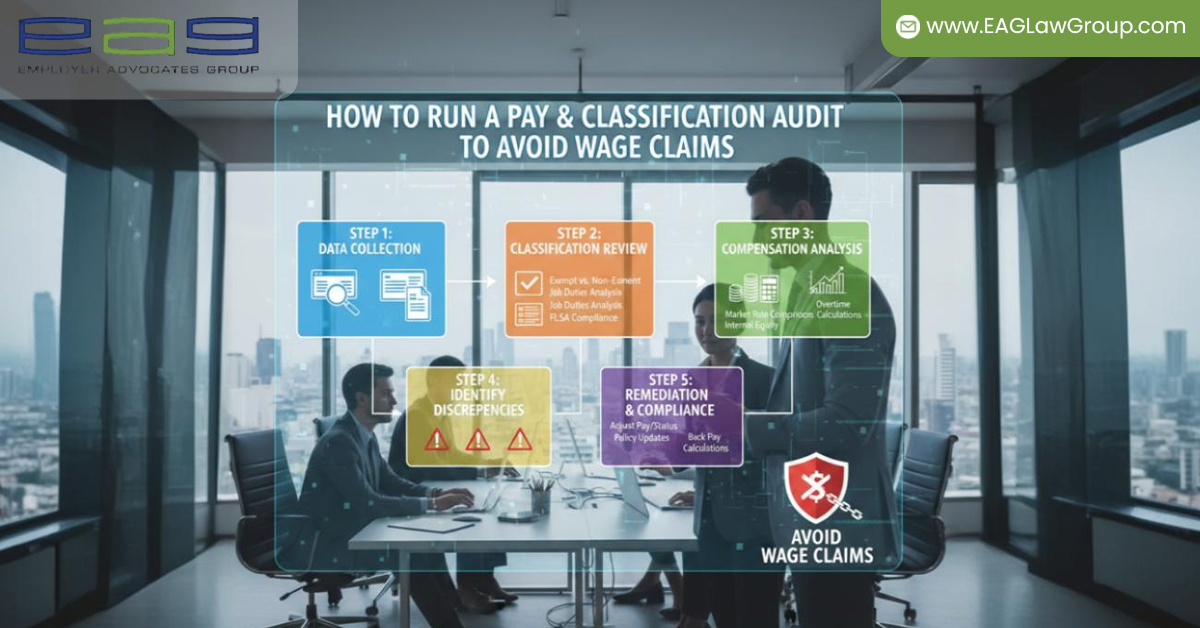
Step 1: Form an Audit Team
Include HR, payroll, and leadership. For higher risk reviews, involve experienced employment counsel. Attorney oversight may help protect findings under privilege.
Step 2: Gather Job Descriptions and Payroll Data
Collect:
- Current job descriptions
- Offer letters
- Compensation plans
- Payroll summaries
- Time records
Then compare documents to actual duties. Talk to supervisors and employees if needed.
Step 3: Test Each Position Against Legal Standards
Do not rely on job titles. Review real tasks performed each week. Document how each role satisfies or fails the exemption criteria.
If gray areas exist, flag them. Conservative decisions often reduce exposure.
Step 4: Identify Gaps and Quantify Risk
Estimate potential back pay if misclassification occurred. Look at overtime hours worked and pay rates. This step helps leadership understand financial exposure and prioritize fixes.
Step 5: Implement Corrections
Possible actions include:
- Reclassifying employees to non-exempt
- Adjusting salaries
- Updating timekeeping procedures
- Revising contractor agreements
Handle changes with care. Communication matters. Sudden shifts without explanation may cause panic or suspicion.
Step 6: Train Managers
Supervisors often drive risk. Train them on:
- Overtime rules
- Prohibition of off-the-clock work
- Proper approval processes
Clear guidance helps prevent repeat problems.
Common Pitfalls Employers Should Avoid
Even well-run businesses trip over the same issues. First, do not delay. Waiting until a demand letter arrives limits options.
Second, avoid partial audits. Reviewing only one department may leave systemic issues untouched.
Third, do not ignore state laws. Some states impose stricter standards than federal law. A compliant federal classification may still violate state rules.
Finally, avoid reactive decision-making. Reclassifying staff right after a complaint without reviewing others in similar roles can trigger broader Wage Claims.
How Employer Advocates Group Supports Employers
Employer Advocates Group focuses on defending and advising businesses in employment disputes, including employee misclassification claims. Our team understands how plaintiffs’ attorneys build cases. We use that insight to help employers tighten practices before trouble starts.
During a pay classification audit, our attorneys:
- Analyze exemption status under federal and state law
- Review contractor relationships
- Assess overtime calculations
- Evaluate the risk of class and collective actions
If litigation has already begun, we craft defense strategies aimed at limiting exposure and protecting your business.
Employers deserve practical advice, not scare tactics. Clear analysis, real-world solutions, and strong advocacy form the core of our approach.
Why Proactive Audits Beat Courtroom Battles?
Litigation costs more than money. It eats time, distracts leadership, and hurts morale. A single lawsuit can pull managers away from running the business.
A proactive audit shows good faith. Regulators often view documented compliance efforts favorably. Courts may also consider remedial actions when assessing penalties.
Running a pay classification audit does not mean you expect a lawsuit. It means you take compliance seriously. Think of it like routine maintenance on a vehicle. Skip it, and problems grow.
Take Control Before a Claim Takes Control
Payroll compliance is not just a back-office task. It protects your brand and bottom line. A thoughtful review today can prevent a courtroom fight tomorrow.
Employer Advocates Group stands ready to help employers assess risk, correct vulnerabilities, and defend against misclassification and wage disputes. If you want to run a pay classification audit with confidence and avoid costly Wage Claims, contact Employer Advocates Group today. Let our team help you protect what you built.
FAQs
1. How often should an employer conduct a pay and classification review?
Employers should review classifications at least once every one to two years, or sooner if job duties change. Rapid growth, restructuring, or new compensation models also justify a fresh look. Regular reviews reduce risk and help prevent costly Wage Claims before they arise.
2. Can correcting a misclassification trigger a lawsuit?
Reclassification alone does not create liability. However, poor communication may raise concerns. Employers should plan changes carefully and review similar roles for consistency. Addressing issues proactively through a documented audit often reduces long-term legal risk and strengthens defense positions.
3. What damages can result from employee misclassification?
Exposure may include unpaid overtime, minimum wage shortfalls, penalties, interest, and attorneys’ fees. In some cases, class or collective actions expand liability across multiple employees. Early identification through a structured audit can limit financial impact and protect business stability.
4. Does federal law control all classification decisions?
Federal law sets baseline standards under the Fair Labor Standards Act. States often impose stricter rules on exemptions, overtime, and contractor status. Employers must comply with both. A thorough review considers each applicable jurisdiction to avoid overlapping compliance failures.
5. Should legal counsel be involved in a pay classification audit?
Legal counsel provides insight into litigation trends and regulatory enforcement priorities. Attorney involvement may also help protect sensitive findings under privilege. For higher-risk roles or large workforces, experienced employment counsel can guide strategic decisions and reduce future exposure.
Our Offices

San Luis Obispo, CA 93401

Contact EAG
Orange County: (949) 277-0303
San Luis Obispo: (805) 782-9900