







Paid Leave & Accommodation: What California Employers Must Do


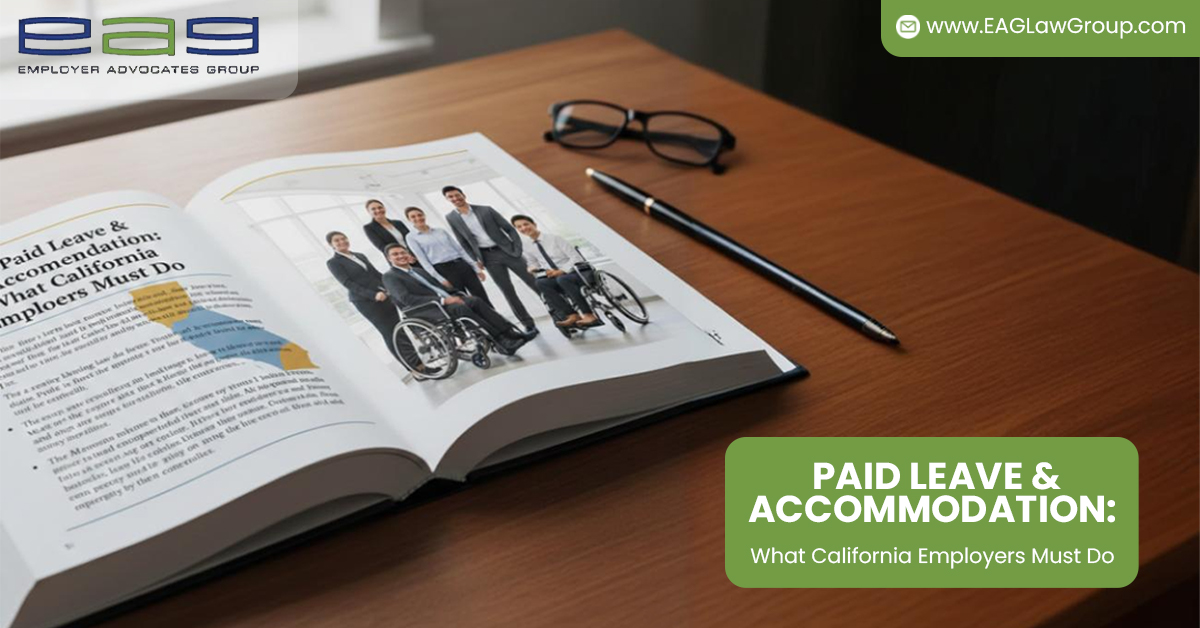
California law moves fast. One rule change can flip your handbook upside down. Miss a step, and your business pays the price. Fines hurt. Lawsuits drain time and money. Smart leaders stay sharp and plan ahead. Rules around paid leave sit at the top of the list. Employers must know who qualifies, how much time to give, and how to track it. Clear policies keep your team steady and your risk low. Strong systems also show good faith if a claim pops up.
At Employer Advocates Group, we focus on protecting California businesses. Our team works with employers only. We help you stay on the right side of the law while keeping your workplace strong.
Understanding California Paid Leave Laws
California offers several types of leave. Each has its own rules. As an employer, you must know the basics.
Key Types of Leave
- State mandated sick leave
- Family and medical leave under CFRA
- Pregnancy disability leave
- Military leave
- Jury duty leave
Each law sets limits on hours, job protection, and notice. Some leave is paid by the employer. Some is wage replacement through the state. Still, your role matters. You must give notices, keep records, and protect jobs when required.
Tracking paid leave is not optional. It must appear on wage statements. You must also follow local city rules. Places like Los Angeles and San Diego add their own layers. One size does not fit all.
Employers Accommodation Duties Under State and Federal Law
Leave and disability issues often overlap. An employee may ask for time off. Or they may need changes to keep working. This is where Employers Accommodation duties begin.
California law and the ADA require employers to engage in an interactive process. You must talk with the worker. Ask what limits exist. Discuss options. Keep notes. This process must be real and honest.
Examples of Reasonable Accommodation
- Modified work schedule
- Light duty
- Remote work when possible
- Extra unpaid leave
- Equipment changes
You do not have to accept every request. Yet you must review each one with care. If an option causes undue hardship, document why. Good records can save you later.
Employer Advocates Group guides companies through Employers Accommodation decisions with practical advice. We focus on solutions that fit your business model.
The Interactive Process Is Not a Guessing Game
Communication is key. Once you learn about a medical need, act fast. Do not ignore it. Do not delay.
Start the interactive process right away. Request medical certification if allowed. Keep questions job-related. Stay respectful. Avoid digging into private details.
Here is a simple flow:
- Receive request or notice of need
- Review job duties
- Seek medical input if needed
- Discuss options with the employee
- Choose a reasonable solution
- Document every step
Clear steps reduce confusion. They also show good faith if a dispute arises.
Common Mistakes Employers Make
Even careful companies slip up. Watch out for these traps:
- Denying leave without a full review
- Failing to track paid leave balances
- Ignoring local city rules
- Skipping the interactive process
- Retaliating after a leave request
Retaliation claims often cost more than the leave itself. Train managers well. Frontline leaders need to know what to say and what not to say.
Policy Drafting and Training Matter
Handbooks should reflect current California law. Old templates cause trouble. Update policies each year. Include clear sections on paid leave and Employers Accommodation duties. Spell out reporting steps. List contact persons.
Training also protects your company. Supervisors must spot red flags. A simple comment like “I need time for surgery” triggers legal duties. Managers should pass issues to HR right away.
Employer Advocates Group partners with California employers to draft policies, review procedures, and train leadership teams. Our firm serves as a strategic legal partner. We aim to prevent claims before they start.
Recordkeeping and Compliance Tips
Keep files organized. Store medical records separately from personnel files. Track leave in real time. Audit your payroll system. Check city ordinances twice a year.
Use checklists. Build internal workflows. Lean on counsel when questions pop up. Acting early costs less than fixing a lawsuit later.
Protect Your Business Before Issues Grow
California leave and accommodation laws can feel like a maze. One wrong turn creates risk. Employer Advocates Group focuses on defending and advising employers across the state. Our attorneys deliver practical guidance rooted in real-world business needs.
Do not wait for a claim letter to land on your desk. Reach out to Employer Advocates Group today. Build smart policies. Train your team. Protect your company with confidence.
FAQs
1. Do small California businesses have to provide paid sick leave?
Yes. Most employers in California must provide paid sick leave, even small businesses. State law covers employees who work at least 30 days in a year. Local city laws may require more generous terms. Employers must track accruals and show balances on wage statements.
2. Can an employer deny an accommodation request?
An employer may deny a request if it causes undue hardship or if no reasonable option exists. However, the employer must engage in a good-faith interactive process first. Clear documentation helps prove compliance. Skipping discussion often leads to legal exposure.
3. Does paid family leave protect an employee’s job?
California Paid Family Leave provides wage replacement through the state. Job protection often comes from CFRA or other laws. Employers must review each case carefully. Overlapping rules can apply. Legal review helps avoid mistakes in complex situations.
4. How long must employers keep leave records?
California employers should keep payroll and leave records for at least four years. Medical documents related to accommodation should remain confidential and stored separately. Strong recordkeeping practices support compliance and defend against claims if disputes arise later.
5. What triggers the interactive process?
Any notice of a medical condition or need for workplace change can trigger the interactive process. The request does not need special words. Once aware, the employer must respond promptly, discuss options, and document efforts to find a reasonable solution.
Our Offices

San Luis Obispo, CA 93401

Contact EAG
Orange County: (949) 277-0303
San Luis Obispo: (805) 782-9900