





Onboarding Best Practices to Reduce Early Termination Claims


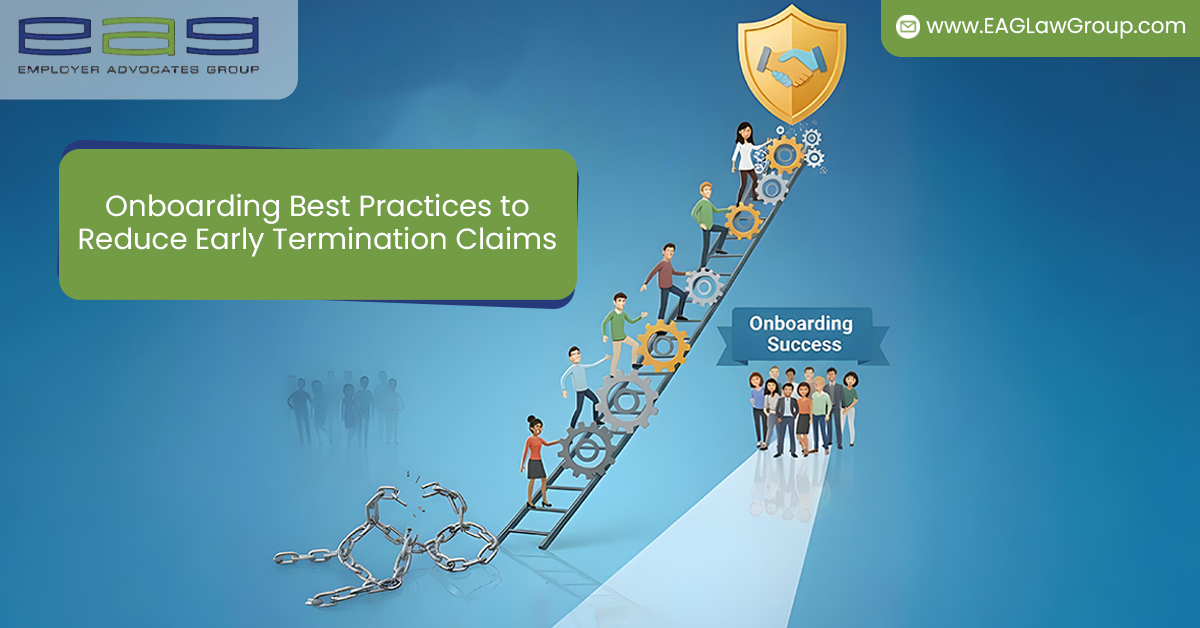
A new hire walks in with hope. An employer feels the same spark. Yet poor first steps can turn promise into a problem fast. Confusion, mixed signals, and weak training often lead to Termination Claims. Smart leaders know strong onboarding practices protect both people and the company. A clear plan builds trust. It sets rules. It shows new team members how to win. Employer Advocates Group helps businesses stay ahead of risk with real legal insight and hands-on employer defense support.
Why Early Claims Happen?
Early claims rarely come out of nowhere. They grow from small gaps. Here is what often goes wrong:
- Job duties change without notice
- Policies feel unclear or hidden
- Managers give mixed feedback
- Discipline feels unfair
- Paperwork stays incomplete
Employees may feel lost. They may think rules apply to some but not others. Soon, a complaint lands on your desk. Solid onboarding practices reduce this risk from day one.
Start With a Clear Offer Letter
Your offer letter sets the tone. Keep it simple and clear. Spell out:
- Job title
- Pay rate
- Work hours
- At will status
- Reporting structure
Avoid vague promises. Do not hint at long-term security unless you mean it. Loose words can fuel Termination Claims later. A clean offer letter protects your company and builds trust from the start.
Employer Advocates Group often reviews hiring documents to make sure employers avoid traps that lead to costly disputes.
Build a Simple and Strong Orientation
Orientation should feel warm but firm. Think of it as setting house rules. Cover these basics:
- Anti harassment policy
- Code of conduct
- Complaint process
- Attendance rules
- Safety steps
Explain each policy in plain talk. Ask new hires to sign an acknowledgment. Keep copies in their file. Clear proof of training helps defend against future Termination Claims.
Also, give them a real chance to ask questions. Silence can hide confusion. And confusion can turn into conflict.
Train Managers to Lead the Right Way
Managers shape the employee experience. Poor supervision often sparks legal trouble. Train leaders to:
- Give steady feedback
- Document performance issues
- Avoid off-hand jokes or risky comments
- Apply rules in a fair way
Consistency matters. If one worker gets written up for being late and another does not, problems brew. Strong onboarding practices must include manager training. It is not just about the new hire. It is about the whole team.
Employer Advocates Group supports companies with training programs built to lower legal risk and protect business goals.
Set Clear Performance Goals Early
People want to know how to win. So tell them. Within the first week:
- Review job duties in detail
- Set short-term goals
- Explain how success is measured
- Schedule check-ins
Put goals in writing. Keep notes from meetings. If performance slips, you have a clear record. This record can block false Termination Claims later.
Frequent check-ins also show good faith. They prove the company tried to help the employee grow.
Create a Fair Discipline Process
No one likes discipline. Yet clear steps keep things calm.
Use a simple system:
- Verbal warning
- Written warning
- Final warning
- Termination
Explain each step during onboarding. Stick to the process unless a serious act requires fast action. Fair systems lower anger. They also lower legal risk.
Strong onboarding practices must explain how discipline works. Surprises lead to claims. Clear rules prevent them.
Keep Documentation Tight
Paperwork may feel boring. Still, it wins cases.
Keep:
- Signed policy forms
- Training logs
- Performance reviews
- Warning notices
- Exit interview notes
Store files in a safe place. Update them on time. Good records often decide the outcome of Termination Claims.
Employer Advocates Group defends employers in complex disputes. Solid records give their legal team the tools needed to fight back.
Review and Improve Your Process
Do not set it and forget it. Laws change. Workplaces change.
Once a year:
- Review policies
- Update handbooks
- Audit training
- Check the manager’s practices
Ask hard questions. Fix weak spots. Smart employers stay proactive, not reactive.
Protect Your Business From Day One
Early mistakes cost time and money. Smart onboarding practices lower confusion, build trust, and cut down on Termination Claims. A strong start sets the tone for the whole work journey.
Employer Advocates Group stands ready to help employers tighten processes, train leaders, and defend against workplace claims. Reach out today to review your onboarding system and build a safer path forward for your business.
FAQs
1. How do strong onboarding practices reduce legal risk?
Clear onboarding sets rules and expectations from day one. Employees sign policies and learn complaint steps. Managers document training and feedback. This creates proof of fairness. Courts and agencies look for consistency. Good records and steady processes help employers defend against claims with confidence and clarity.
2. What documents matter most during onboarding?
Offer letters, signed handbook acknowledgments, job descriptions, and training logs carry heavy weight. Performance goal sheets also help. These papers show what the employee knew and agreed to. In disputes, written proof often matters more than memory or verbal promises made during early meetings.
3. Why do early Termination Claims happen so fast?
New hires may feel confused or misled if roles shift or policies seem unclear. Poor communication can spark fear or anger. Without steady feedback, small issues grow. Early structure, honest talks, and written expectations prevent misunderstandings and reduce the chance of sudden legal complaints.
4. Should managers receive legal training during onboarding updates?
Yes. Managers act as the company’s voice. If they ignore policy or speak carelessly, risk rises. Basic legal training helps them apply rules in a fair way. It also teaches them how to document issues and handle complaints before they grow into formal claims.
5. How can Employer Advocates Group support our company?
Employer Advocates Group focuses on defending and protecting employers. The firm provides guidance on hiring documents, policy reviews, training, and claim defense. Their legal team understands workplace disputes and builds strategies designed to reduce risk and control costs for growing businesses.
Our Offices

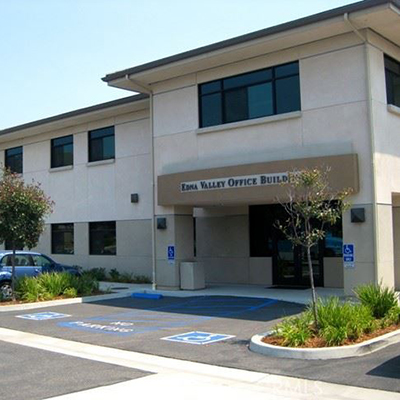
San Luis Obispo, CA 93401

Contact EAG
Orange County: (949) 277-0303
San Luis Obispo: (805) 782-9900