





How to Run an Internal Investigation: A Step-by-Step Guide for Employers


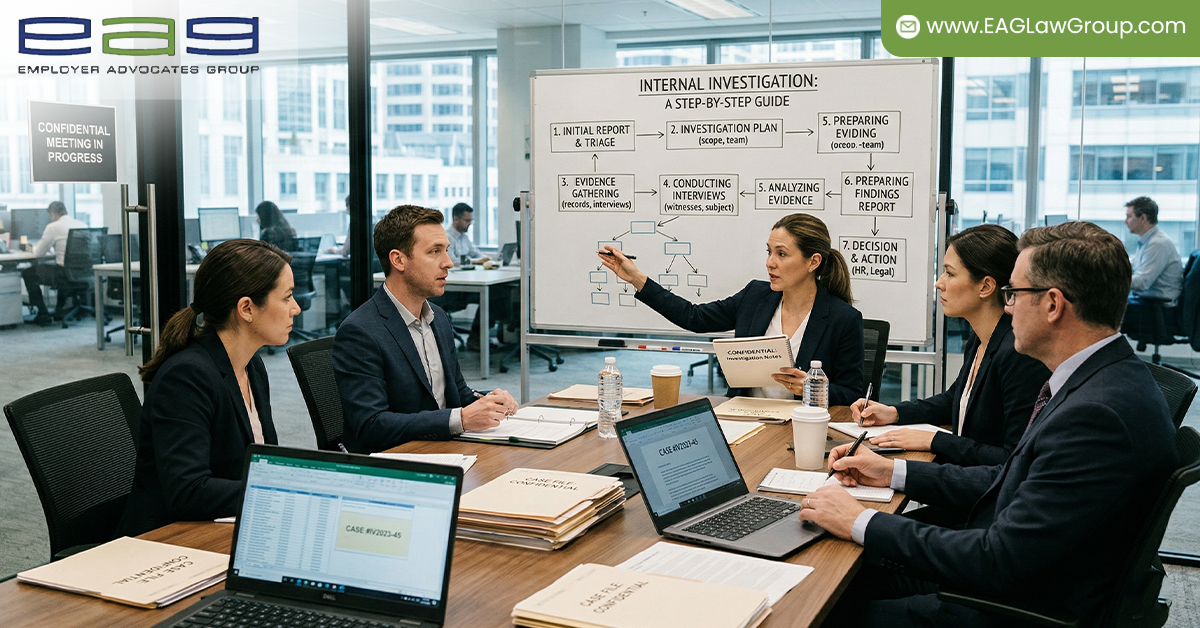
Workplace issues can spiral fast. A small concern can turn into a big risk if left unchecked. Clear action keeps things fair and protects your team. A strong internal investigation builds trust, keeps rules in line, and helps leaders act with care. It also shows your staff you take concerns seriously.
At Employer Advocates Group, guidance stays practical and grounded. Each step aims to reduce risk while keeping respect at the core.
Why a Proper Investigation Matters?
A well-run process does more than solve a problem. It protects your brand, your people, and your legal footing. When leaders respond with structure and care, outcomes stay balanced.
A clear workplace investigation also helps avoid bias. It keeps facts front and centre. In turn, it supports better decisions and reduces disputes later.
Step-by-Step Guide to Running an Investigation
1. Define the Issue Clearly
Start with a clear complaint or concern. Write down key facts as shared. Keep the scope tight. Avoid jumping to conclusions. A focused start keeps the process clean and fair.
2. Choose the Right Investigator
Pick someone neutral. No ties to people involved. No stake in the outcome. This helps build trust. In complex cases, outside counsel like Employer Advocates Group can guide or lead the process.
3. Plan the Process
Set a roadmap before you begin. Decide who to interview, what documents to review, and how long it may take. A plan saves time and avoids confusion later.
4. Gather Evidence
Collect emails, policies, reports, and any records tied to the issue. Keep all files secure. Each piece of evidence should link back to the concern raised.
5. Conduct Interviews
Speak with the complainant, the respondent, and any witnesses. Ask clear questions. Listen with care. Take notes or record with consent. Keep tone calm and respectful.
6. Assess the Facts
Compare all accounts. Look for gaps, patterns, and support from documents. Stay neutral. Focus on facts, not feelings.
7. Make Findings
Decide if claims are supported based on evidence. Use a balance of probabilities standard. Keep reasoning simple and clear.
8. Take Action
If a breach took place, act in line with company policy. Steps may include training, discipline, or policy updates. Fair action helps prevent repeat issues.
9. Document Everything
Create a full report. Include steps taken, evidence reviewed, and final findings. Good records protect your business if questions arise later.
10. Follow Up
Check in with involved parties. Ensure no retaliation takes place. A proper close builds trust and shows care for your team.
Quick Checklist for Employers
- Keep the process fair and neutral
- Protect privacy at every step
- Act within a clear timeline
- Base findings on facts, not guesswork
- Seek legal guidance for complex matters
Investigation Timeline Overview
| Stage | Key Action | Suggested Timeframe |
| Intake | Receive and log a complaint | Day 1 |
| Planning | Define the scope and assign the investigator | Day 2 to 3 |
| Evidence Collection | Gather documents and records | Day 3 to 7 |
| Interviews | Speak with all parties | Day 5 to 10 |
| Analysis | Review facts and compare accounts | Day 10 to 14 |
| Report and Outcome | Draft report and take action | Day 14 to 18 |
| Follow Up | Monitor and close the case | Day 18 onward |
Common Pitfalls to Avoid
- Rushing the process without a plan
- Letting bias shape decisions
- Ignoring key witnesses or evidence
- Failing to document steps
- Poor communication with staff
A weak process can lead to legal risk. A strong internal investigation protects your workplace and builds trust across teams.
Why Partner with Employer Advocates Group?
Employer Advocates Group brings deep legal insight and practical know-how. We support each stage of a workplace investigation with care and precision. From planning to final report, we help reduce risk and keep your process fair.
Our approach stays clear and easy to follow. You get guidance you can use right away, without confusion or fluff.
Reach Out to Employer Advocates Group
Handling a workplace concern is no small task. A clear plan, fair steps, and strong support make all the difference. With the right process, your team feels heard, and your business stays protected.
Need help with a sensitive issue? Reach out to Employer Advocates Group and get expert support for your next internal investigation.
FAQs
1. What is an internal investigation in the workplace?
An internal investigation is a structured process used to review complaints or concerns within a company. It involves gathering facts, interviewing people, and reviewing documents. The goal is to find the truth and decide on fair action based on evidence.
2. Who should lead a workplace investigation?
A neutral and trained person should lead the process. This could be an HR professional or legal expert. For complex cases, external advisors like Employer Advocates Group ensure fairness and reduce legal risk through proper handling.
3. How long does a workplace investigation take?
The timeline depends on the case size and complexity. Simple cases may take a few days. Larger cases can take weeks. A clear plan and steady pace help keep the process on track without rushing key steps.
4. What standard of proof is used in investigations?
Most employers use the balance of probabilities. This means a claim is more likely true than not based on evidence. Investigators review facts, compare accounts, and decide based on reason and consistency.
5. Can employees bring legal claims after an investigation?
Yes, employees may raise legal claims if they feel the process was unfair. A well-documented and fair workplace investigation helps protect the employer. Clear steps and legal guidance reduce the chance of disputes later.
Our Offices


San Luis Obispo, CA 93401

Contact EAG
Orange County: (949) 277-0303
San Luis Obispo: (805) 782-9900