






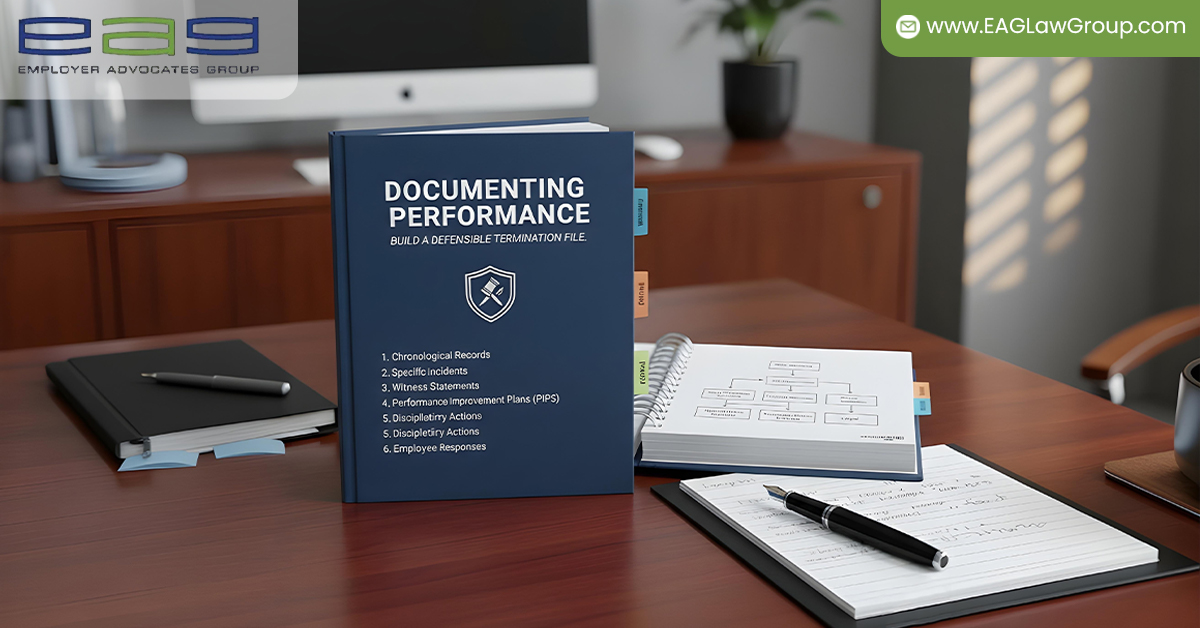
Documenting Performance: Build a Defensible Termination File


Running a business is not easy. You hire with hope. You train with care. You invest time and money. Still, some team members fall short. When employee performance drops and talks do not fix it, you may face a hard choice. Ending a job can feel tough. Yet if you handle it the right way, you protect your company and stay fair.
At Employer Advocates Group, we stand with employers. Our team focuses on labor and employment law. We help business owners stay strong, smart, and ready. A solid termination file gives you power. It shows facts. It shows effort. It shows fairness.
Let’s break down how to build one the right way.
Why Documentation Matters?
Good notes are your safety net. If a former worker files a claim, your file speaks for you.
Clear records help you:
- Prove poor employee performance
- Show fair treatment
- Support your business reasons
- Reduce risk of lawsuits
- Stay in line with state and federal laws
Think of it like building a house. Without a strong base, the whole thing can fall. Documentation is your base.
Start Early and Stay Consistent
Do not wait for a big blow-up. Start your performance track on day one.
Create simple records for:
- Job descriptions
- Training steps
- Goals and targets
- Attendance
- Policy sign-offs
Then keep adding notes as time goes on. If someone misses goals or breaks rules, write it down. Keep dates. Keep details. Stick to facts.
Consistency is key. Treat all staff the same. If one worker gets written up for being late, others should too. Fair play matters.
Use a Clear Performance Track System
A strong performance track shows a pattern. It shows you gave the worker a chance to improve.
Here is a simple table you can use as a guide:
| Step | Action Taken | Date | Employee Response | Manager Notes |
| 1 | Verbal warning | 01/10/2026 | Agreed to improve | Missed 3 shifts |
| 2 | Written warning | 02/05/2026 | Signed form | Sales below goal |
| 3 | Final warning | 03/01/2026 | No comment | No change seen |
| 4 | Termination | 03/20/2026 | N/A | Policy followed |
This table keeps things simple. It shows steps. It shows fairness. It shows effort.
Employer Advocates Group often helps employers review systems like this. A clean performance track can make or break a case.
Focus on Facts, Not Feelings
Emotions can run high. Stay calm. Write facts only.
Instead of saying:
- Bad attitude
- Lazy
- Not a team player
Say:
- Missed 4 deadlines in one month
- Refused task on 02/12/2026
- Received 3 client complaints
Facts are hard to argue with. Opinions are easy to attack. Clear proof of poor employee performance gives your file strength.
Give a Chance to Improve
Courts like to see effort. Show you tried to fix the problem.
Use:
- Coaching talks
- Written improvement plans
- Training refresh
- Clear deadlines
Set simple goals. For example, increase sales by 10 percent in 30 days. Or reduce errors to zero in two weeks.
Track results in your performance track. If the worker improves, great. If not, your file shows you acted in good faith.
Keep Policies Up to Date
Old rules cause big trouble. Review your handbook each year. Make sure it fits current law.
Employer Advocates Group helps employers draft and update policies. Our team works only with management. We focus on protecting your business. A strong handbook supports your file.
When rules are clear, your actions look fair.
Store Files the Right Way
Keep records safe and private. Use secure digital systems or locked cabinets. Limit access to key staff.
Organized files help you act fast if a claim pops up. No scrambling. No guessing. Just facts.
A tight performance track paired with solid proof of employee performance issues builds real defense power.
Work With Experienced Counsel
Termination is not just an HR task. It is a legal risk point.
Employer Advocates Group focuses on labor and employment law. We guide employers through discipline, investigations, wage issues, and termination steps. Our job is to help you avoid trouble before it starts.
Smart advice early can save stress later.
Protect Your Business Before Problems Grow
Let’s be real. Letting someone go is never fun. Still, sloppy paperwork can hurt more than a hard talk.
Build strong files. Track issues early. Stay fair. Stay calm. Stay smart.
Employer Advocates Group helps employers create clean systems, review discipline steps, and defend tough decisions. If you want to protect your company and sleep better at night, reach out today. Our team stands ready to help you move forward with confidence.
FAQs
1. Why is documentation so important before termination?
Documentation shows clear business reasons for ending employment. It proves poor performance or policy violations with dates and facts. Courts look for patterns, not surprises. A solid file reduces claims of bias or unfair treatment and protects your company during disputes or agency investigations.
2. How detailed should performance notes be?
Notes should be clear, short, and fact-based. Include dates, actions, and outcomes. Avoid personal attacks or emotional words. Stick to behavior and results. Detailed records create a reliable history of employee performance and show consistent management practices over time.
3. Should employers always give warnings first?
In most cases, yes. Warnings show fairness and give workers a chance to improve. However, serious misconduct may justify immediate termination. Each case differs. Legal guidance ensures your response matches company policy and current employment law requirements.
4. Can inconsistent discipline create legal risk?
Yes. Treating similar issues differently can lead to claims of discrimination or retaliation. Consistency builds trust and legal protection. A clear performance track system helps employers apply rules evenly and defend decisions with confidence.
5. When should an employer call legal counsel?
Call counsel before final termination, during complex investigations, or when protected leave, complaints, or wage issues are involved. Early legal review reduces mistakes. Proactive advice saves money, time, and stress in the long run.
Our Offices

San Luis Obispo, CA 93401

Contact EAG
Orange County: (949) 277-0303
San Luis Obispo: (805) 782-9900